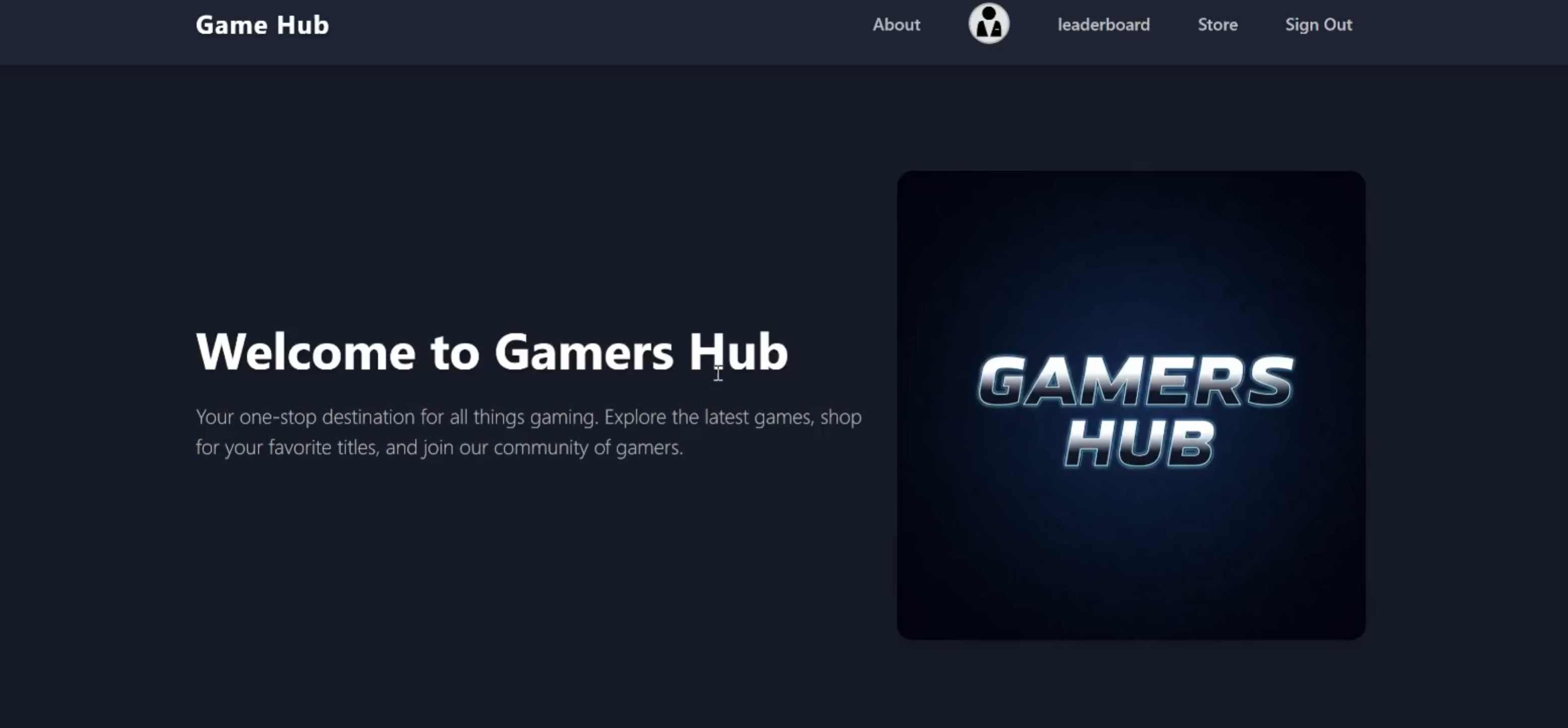
 Complete
Demo
GamingHub
A multiplayer gaming platform featuring real-time gameplay, leaderboards, and user profiles with secure authentication.
Overview
GamingHub is a full-stack web application that provides an engaging multiplayer gaming experience. Players can compete in real-time games, track their progress on leaderboards, and maintain persistent profiles across sessions.
Key Features
- Real-Time Multiplayer - Synchronized gameplay across multiple clients
- Global Leaderboards - Track top players and statistics
- User Profiles - Persistent user data and game history
- Secure Authentication - Password hashing and session management
- Responsive UI - Dynamic updates without page refreshes
Technical Challenges
Challenge: Real-Time User Connection
Creating seamless real-time communication between multiple players while maintaining game state consistency was critical for the user experience.
Solution
Implemented Socket.io for WebSocket communication:
- Room-based game sessions for isolated gameplay
- Event-driven architecture for game actions
- Connection state management for player drops/reconnects
- Optimized message frequency to reduce server load
Challenge: Security
Needed to protect user credentials and prevent unauthorized access to game sessions.
Solution
Implemented comprehensive security measures:
- bcrypt for password hashing (salt rounds: 10)
- Session-based authentication
- Input validation and sanitization
- Protected API endpoints
- XSS prevention in user-generated content
Tech Stack
- Frontend: React with Hooks, CSS3
- Backend: Node.js with Express
- Database: MongoDB with Mongoose
- Real-Time: Socket.io
- Security: bcrypt, express-session
- Deployment: Heroku (backend), Netlify (frontend)
Outcome
Successfully delivered a smooth multiplayer experience with:
- Low latency real-time updates (<100ms)
- Secure user authentication system
- Dynamic UI updates without page reloads
- Scalable architecture supporting multiple concurrent games
What I Learned
- WebSocket programming with Socket.io
- Real-time state synchronization
- Security best practices for web applications
- Password hashing and session management
- MongoDB schema design for gaming data
- Event-driven architecture patterns
Tools & Languages
Languages: JavaScript, HTML5, CSS3
Frameworks & Libraries: Node.js, Express.js, EJS (templating), Socket.io, Mongoose, bcrypt, express-session
Database: MongoDB
Deployment: Heroku (backend), Netlify (frontend)